Vinitech-Sifel, the international event driving the future of the wine, fruit and vegetable sectors through innovation, sustainability and knowledge transfer
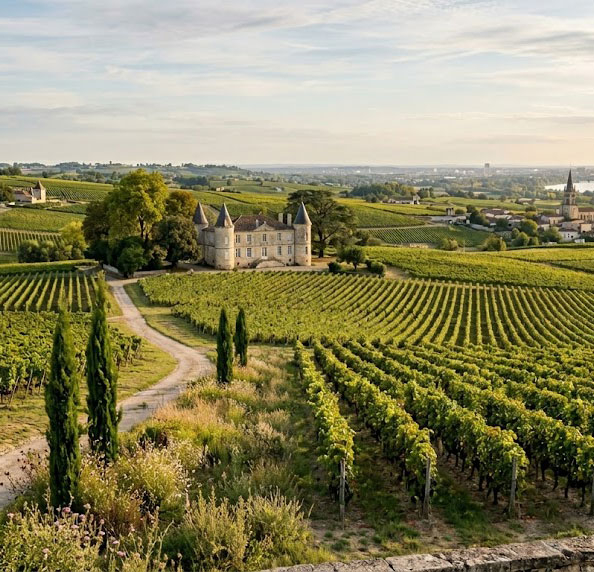
TERRITORY
Supporting the local economy through regional suppliers, partners and industry stakeholders (Chamber of Agriculture, CIVB, INRAE, IFV, Organic Winegrowers of Nouvelle-Aquitaine, etc.).
Driving regional innovation through the Startup Village, industry clusters (Inno’Vin, INTERCO NA), and support for emerging businesses via dedicated funding schemes (e.g. VitirEV).
Generating direct economic benefits for the region and its businesses, while fostering international development through export initiatives, the SIRENA programme, and cooperation with international representatives.
Strengthening professional ecosystems through partnerships with local and industry events (Vi-Tic, Perifel, VITEFF, Agrovina).
Facilitating visitor mobility through partnerships with Keolis and Bordeaux Métropole, as well as dedicated coach transport solutions.
Showcasing local resources and stakeholders throughout the event programme and exhibition areas.
Promoting the excellence of the Nouvelle-Aquitaine wine industry and its expertise to international audiences through 14 technical visits organised during the event.
ENVIRONMENT
Exemplary waste management, with 93% of waste recovered and significant reductions in consumables (most carpeting removed, partial elimination of cotton floor covering, reusable signage systems).
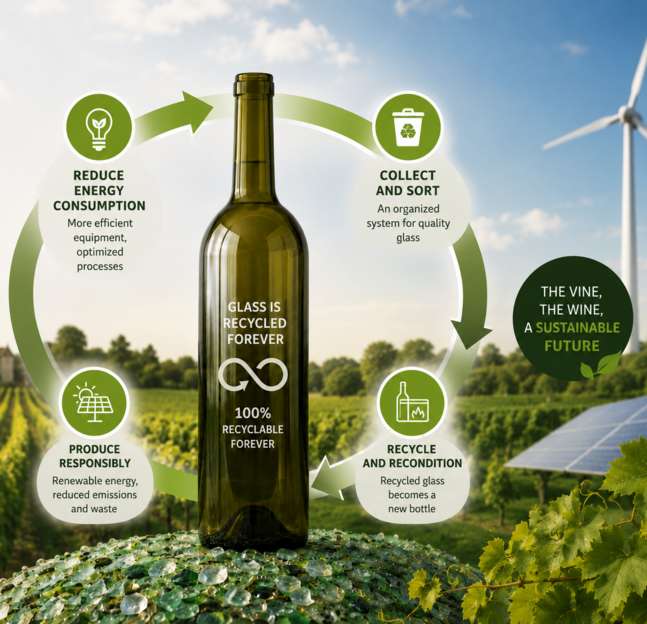
Advancing recycling and the circular economy through glass bottle reuse (Eco In Pack), cork recycling (Agir Cancer), and the donation of materials after use.
Reducing carbon emissions through sustainable mobility solutions, including international coach services, direct tram access and free parking facilities.
Committed to the energy transition with 100% renewable electricity, 20 hectares of photovoltaic panels, and optimised energy consumption.
Eco-designed event management through reduced printing, digitalised communication materials and lower event-related waste generation.
Working with responsible suppliers committed to CSR principles and sustainability-focused selection criteria.
A dedicated Transition Area promoting agroecology and sustainable viticultural practices in partnership with the French Ministry of Agriculture (DRAAF).
Tangible impact measurement, including the reuse of 15,000 bottles, representing approximately 7.8 tonnes of CO₂ emissions avoided.
Raising awareness among visitors about corporate social responsibility initiatives.
Hosting the Agroecology Summit as part of the event programme.
LEGACY
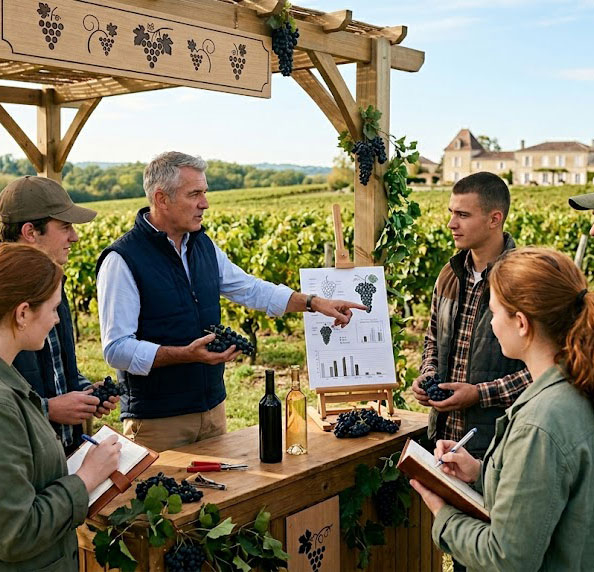
Supporting knowledge transfer and training future generations through partnerships with educational institutions and professional organisations (Bordeaux Sciences Agro, ISVV, EPLEFPA, APECITA, etc.).
Promoting career opportunities across the sector through initiatives such as Vinitech Games, the Skills and Careers Hub, career-focused spaces, and support for business succession planning.
Encouraging research and innovation to shape the future of the industry through collaborations with the INSEEC Wine Chair, INRAE, IFV, and strategic foresight projects.
Demonstrating a strong social commitment through accessibility for people with disabilities, balanced representation among speakers, inclusion initiatives, and health and safety awareness programmes for agricultural workers.
Supporting solidarity and philanthropy through food donations, fundraising for cancer research (Agir Cancer / Institut Bergonié), and international development projects in Madagascar.
Preserving and promoting winegrowing and agricultural heritage through agroecological practices and professional networks.
Contributing to the long-term resilience and transformation of the industry by combining responsible innovation with the preservation of expertise and know-how.